


How office coffee affects employee morale and workplace culture
Lily | August 21, 2026 | 7 minute read

An office space gives hundreds of small, mostly unspoken signals about it’s owners.
One of those signals, well below pay and workload but higher than most businesses assume, sits office coffee machines.
The coffee that your team drinks might look like a minor thing on paper. You might be thinking, “so what? It’s coffee.” But it stops being minor when your team has to face it five days a week.
The point is, bad coffee costs your business. In this blog we aim to explore the biggest psychological impacts of bad coffee on office teams, though we have a blog that explores the monetary costs of bad coffee with calculations.
Why the small things matter
Psychologists have a name for this pattern: daily hassles, the minor recurring irritations that research has repeatedly found predict stress and low mood as reliably as major life events, sometimes more so. The mechanism isn’t severity, it’s frequency. A big problem gets noticed, escalated and fixed. A small one just repeats, and there’s rarely enough recovery time between one annoyance and the next before it happens again.
A coffee provision that lets people down does so on a loop, roughly two hundred and fifty times a year. None of those mornings necessarily feels like a crisis on its own. But add them together and you have exactly the kind of low grade, chronic irritation that research links to worse mood and lower tolerance for everything else the day throws at people.
This is also why a bad coffee machine is so easy to underrate as a business problem. Nobody puts in a formal complaint about a slow drip or a queue, because on any single morning it genuinely isn’t worth the fuss. It only becomes a problem in aggregate, which means it rarely reaches whoever holds the facilities budget until the goodwill it’s quietly draining has already gone.
What a broken machine unconsciously signals
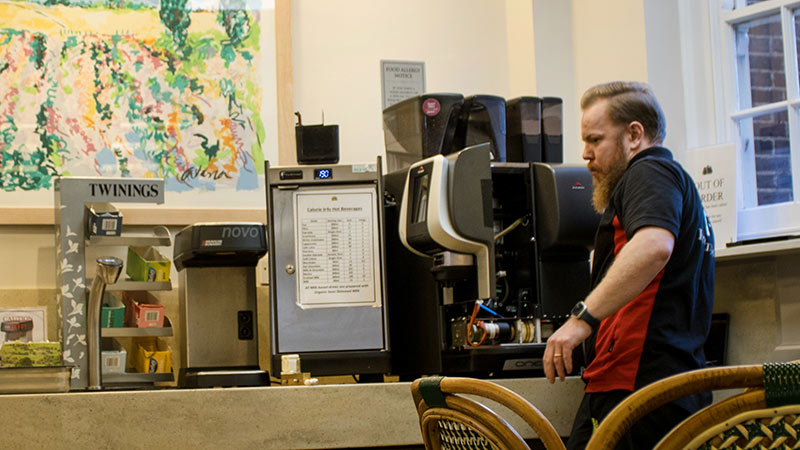
There’s a well known idea in environmental psychology and criminology called broken windows theory, the observation that one unrepaired sign of neglect quietly tells people that nobody is watching and nobody minds, which invites more neglect to follow. It was developed to explain vandalism in neighbourhoods, but the underlying logic travels indoors just as easily. A jammed, grimy or ignored machine is a small broken window. It sets a tone for the whole breakout space.
There’s a more direct explanation too. Organisational psychologists studying what’s called perceived organisational support have found that employees read an employer’s willingness to sort out small, everyday things as real evidence of whether the organisation values them, not just as a footnote to bigger decisions like pay or promotion. A machine that’s been quietly broken for months says something about that, whether or not anyone means it to.
The quiet resignation that follows
Here’s the part that catches facilities teams out. Complaints about the coffee machine often don’t get louder over time. They go quiet. That silence tends to get read as the problem sorting itself out, when it’s usually the opposite: people have simply stopped expecting anything to change, so they’ve stopped mentioning it.
That kind of quiet resignation is corrosive precisely because it’s invisible. A loud complaint is a problem you can see and fix. A team that has mentally written off the breakout area is a problem that looks, from the outside, exactly like nothing being wrong.
It’s worth being honest about what that resignation actually costs. Once people stop expecting a fix, they generalise the assumption. A machine nobody bothers to sort out becomes evidence, fairly or not, for a wider belief that small requests in general go nowhere. That’s a much harder thing to undo than a broken part, because it isn’t really about the coffee any more.
What visitors read into it in seconds
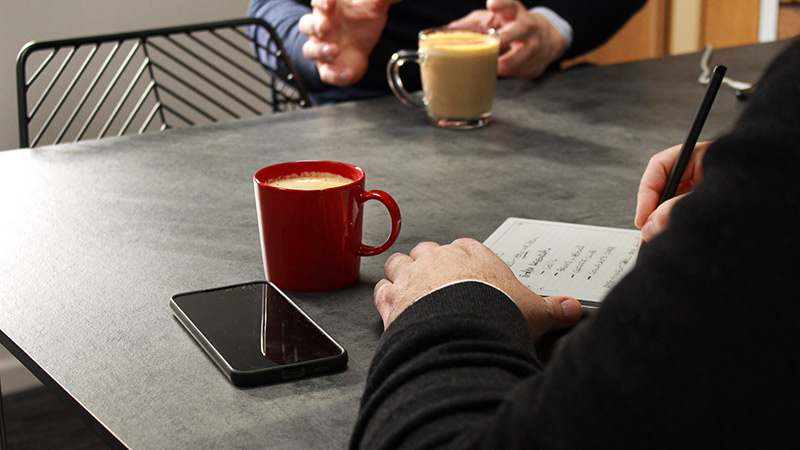
People form impressions of a space almost instantly, and the coffee area is one of the fastest cues going. A workplace survey by office design firm Morgan Lovell found that 62 percent of respondents felt a coffee bar was the most welcoming thing a reception could offer. The same snap judgement runs the other way. A tired, poorly kept machine tells a visiting client or candidate, in the first thirty seconds, roughly how much attention the business pays to its own details.
The actual cost in pounds and pennies
While the psychological drain is hard to measure on a spreadsheet, the direct financial impact of poor workplace coffee is remarkably simple to calculate.
The largest hidden expense comes down to lost working time. When office drinks fall short of expectations, staff naturally leave the building to buy coffee from local cafes. A standard coffee run takes around fifteen minutes once you account for stepping away from the desk, walking down the street, queuing, and waiting for an order.
If an employee makes two of these trips each day, they spend half an hour away from the office every single day. Based on an average UK office salary of £38,000, which breaks down to approximately £20 per hour, those thirty lost minutes represent a direct cost of £10 per day per person.
Over a standard working year of two hundred and twenty office days, that equates to £2,200 in lost productive time for a single employee. For a team of thirty people, your business is effectively handing over £66,000 a year to local coffee shops in uncaptured working hours.
Comparing these numbers to the cost of an in-house coffee setup highlights the clear commercial advantage:
- Leasing a commercial bean-to-cup machine typically costs an office between £3 and £8 per day depending on the size and specification of the machine
- Supply costs for speciality roasted coffee beans along with fresh dairy or plant milk work out to roughly 25p to 35p per cup.
- An employee buying two high-street drinks a day spends over £8 daily, amounting to nearly £1,800 out of their own pocket every year.
- Providing that same quality free of charge in the kitchen functions as a tangible daily perk while keeping staff on-site and focused.
Choosing a coffee machine for office use that resets the signal

The fix isn’t a lecture about positivity, it’s a genuinely reliable bean-to-cup machine for office use that people can actually rely on, cleaned and serviced properly, without anyone having to chase it. That single change works on every level covered above: it removes the daily hassle, it replaces a small broken window with a small sign of care, and it gives your team something to notice again, which is the first step in undoing quiet resignation.
Reading the room
Here are some things you can consider to assess if its time to switch up your coffee.
- Has your team stopped mentioning the coffee machine altogether, in a way that reads more like resignation than satisfaction?
- Do people bring in their own instant coffee and matcha powder or leave the building rather than use what’s provided?
- Does the state of the machine match how carefully the rest of the office is kept, or does it stand out for the wrong reasons?
- Would a new starter’s first impression of the breakout area match how the business wants to be seen?
If any of those land, the coffee machine has probably already told your team something you didn’t mean to say.
Let’s chat
If you’d rather your coffee area sent the right signal, we’ll help you get there. We work with facilities teams across the UK to replace tired, unreliable setups with something your team and your visitors actually notice for the right reasons.
Book a coffee experience to try a setup built to hold up day to day, or get in touch and we’ll talk through what a change would look like for your office.