


Bean-to-cup vs traditional espresso machines: The facilities manager’s guide
Lily | May 12, 2026

When you begin researching premium office coffee machines, you are immediately faced with a fundamental choice: do you opt for a bean-to-cup machine, or a traditional espresso machine?
Both options sit at the top end of the market, but they serve very different operational needs.
Choosing the wrong one can lead to disgruntled staff, wasted budget, or a machine that sits idle and unmaintained because it is too complex to operate. This guide explores the technical and practical differences between these two systems to ensure your investment delivers the best possible return for your workspace.
Understanding the bean-to-cup solution
As Anthony explains in the video below, a bean-to-cup machine is defined by its ability to handle the entire coffee-making process within a single, closed system.
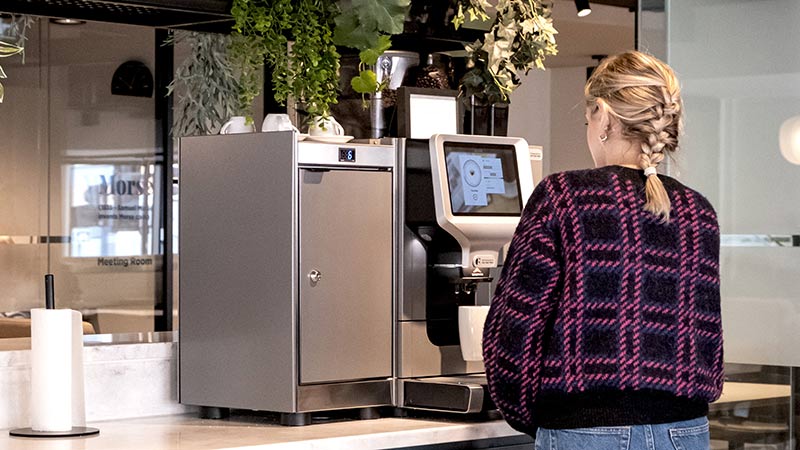
To put it more simply, you put the beans in and coffee comes out.
How bean-to-cup technology works
The process is entirely automatic. The coffee machines are programmed with recipes, for example a cappuccino or latte. This calibration process determines the amounts of coffee and water that are dispensed, as well as the internal pressure.
When a user selects their drink from the touchscreen, the machine begins by grinding a precise dose of fresh coffee beans. These grounds are then moved into an internal brewing unit where they are pressed into a puck. Hot water is forced through the puck at high pressure to create the espresso base. Some models will add foamed milk at this stage, either from powdered milk or a fresh milk reservoir. Other models might also offer dairy-free milks or coffee alternatives like chai or matcha.
What sets modern bean-to-cup machines apart is their versatility and ease of use. No training is needed, and a full menu of options that cater to different tastes and dietary needs can be customised.
Why facilities managers choose automation
The most compelling reason to choose a bean-to-cup machine is the unrivalled consistency it offers. One of the greatest challenges in a large office is ensuring every cup of coffee tastes the same. Because of the programmed recipes the quality remains the same as long as the coffee machine is well maintained.
Speed and high volume output are also major factors for busy workplaces. And there are lots of options for capacity. While compact models are available for smaller teams, larger machines can comfortably dispense up to 400 cups a day. For offices with high-traffic days, these high-powered units can prevent downtime.
From a facilities perspective, the minimal training requirement is a significant advantage. New staff members or visitors do not need a safety induction to get a drink.
Furthermore, modern bean-to-cup machines make cleaning easy for you with screens and visual instructions. Suppliers also offer specified cleaning products to help users keep the machine healthy. This reduces the manual labour required from your cleaning or facilities team, as the machine prompts the user when it needs a simple tablet cleaning or a milk system flush.
Operational considerations
While bean-to-cup machines are highly efficient, they are complex pieces of technology. They benefit from regular professional servicing to maintain the internal grinders and brewing units. Service plans can help businesses keep on top of maintenance, they schedule maintenance visits and help you keep on top of parts and filters. You can see an example on our service plans page. You also need to consider the physical footprint. These machines often require extra height for bean hoppers and side-space for fresh milk fridges. It is also worth noting that the quality of the drink is entirely dependent on the ingredients. If you want a premium result, you must invest in high-quality beans and store them correctly.
The traditional espresso machine
If the bean-to-cup machine is about efficiency, the traditional espresso machine is about the experience. This is the equipment you see in professional coffee shops, often referred to as a group machine or an Italian espresso machine. In an office setting, this choice is often about making a statement rather than just providing a caffeine fix.
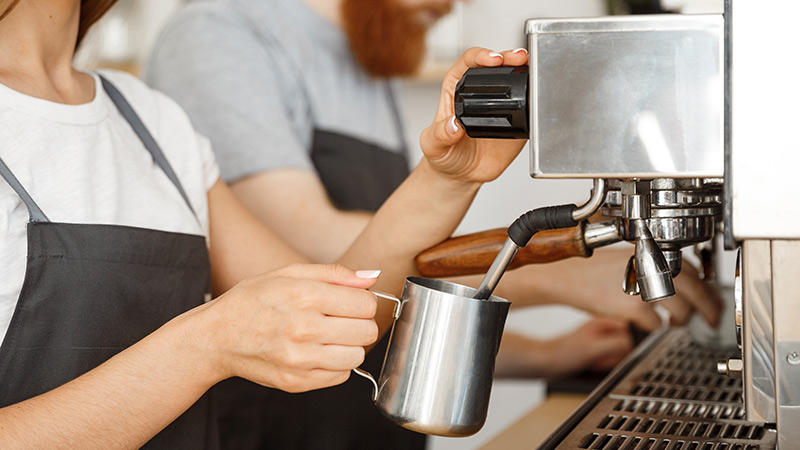
The manual process
A traditional machine is not automatic. To make a single cup of coffee, the user must engage in several steps with some degree of precision. First, the beans must be ground in a separate, dedicated grinder. The user then transfers the grounds into a portafilter or group handle, tamps them down with a flat bottomed press to ensure an even extraction, and locks the handle into the machine.
The espresso is extracted manually, and the milk is steamed using a steam wand. This requires a high level of skill, as the user must manually control the air injection to create the different foam textures necessary for high-quality cafe-style drinks.
The appeal of the traditional machine
The primary draw for many businesses is the aesthetics and atmosphere. There is no denying that a traditional machine looks impressive. It provides a proper cafe feel to a reception area or a dedicated staff lounge. For businesses that host a lot of high-value clients, the sight and sound of a traditional machine being operated can significantly enhance the brand image and the hospitality experience.
There is also the theatre of coffee to consider. Many people enjoy the ritual of making coffee. The tactile experience, the smell of the fresh grind, and the process of steaming milk provide a genuine mental break from the screen. It turns a simple break into a craft-led experience that can foster social interaction between different departments.
In terms of reliability, these machines are absolute workhorses. Because they have fewer automated internal parts than a bean-to-cup machine, they are incredibly durable. When maintained correctly, a high-quality traditional machine can last for many years in a high-demand environment. They are built to make hundreds of coffees every day, just as they do in high-street coffee shops.
The challenges for the workplace
The primary drawback of a traditional machine in an office is the skill gap. The quality of the coffee is entirely dependent on the person making it. If a staff member has not been trained, they will likely produce poor-quality coffee or, worse, potentially injure themselves with the high-pressure hot steam. For a facilities manager (FM), this means you must either commit to regular staff training sessions or consider hiring a professional barista who would be solely responsible for its operation.
There is also the issue of time. This is the slower of the two coffee machine types, which can lead to frustration during peak times like the morning rush or following a large meeting. Finally, these machines require constant maintenance throughout the day, such as purging steam wands and wiping down surfaces, to remain hygienic and functional as well as about 30 minutes of cleaning at the end of the day for all parts including grinder, group head and steam wand.
Practical comparison for facilities planning
When planning your coffee solution, there are several technical requirements that will influence your choice. Both types of machines usually require a plumbed-in water connection and specific power requirements, often needing a dedicated circuit if you are installing a high-capacity multi-group machine.
A traditional machine also needs a separate grinder and plenty of counter space for the barista to work comfortably. A bean-to-cup machine is more contained and often has a smaller footprint, though you must ensure you have enough vertical clearance to refill the bean hoppers at the top of the unit.
Maintenance schedules differ as well. Traditional machines require a small amount of manual cleaning between every single cup to maintain flavour and hygiene. Bean-to-cup machines are more “set and forget” for the majority of the day, usually only requiring a deep clean at the end of the day or after a certain number of cups have been served.
Selecting the right machine for your office culture
The decision between bean-to-cup and traditional espresso machines often comes down to your office culture and the specific job you need the coffee machine to do.
If you have a medium to large team that values speed and efficiency, a bean-to-cup machine is likely your best option. It provides the barista experience without the need for a barista. It is the perfect fit for environments where you want to offer a wide variety of drinks, including mochas or hot chocolates, from the same unit without any fuss.
However, if you want to create a specific atmosphere, have the time to dedicate to the craft, or perhaps have a dedicated front-of-house person to serve guests, the traditional machine offers a level of prestige and customisation that is hard to beat. It is a choice that prioritises the “theatre” of the office over pure efficiency.