


Rainforest Alliance vs Fairtrade – what’s the difference?
Lily | November 4, 2026 | 5 minute read

You will have almost certainly seen both the Fairtrade mark and the Rainforest Alliance green frog seal on coffee packaging. But when you are choosing supplies for your office, do you know what each certification actually guarantees?
Making sustainable purchasing decisions is high on the agenda for modern businesses. Whether you are aiming to meet ESG targets, or simply to offer your team a cup of coffee they can feel good about drinking, understanding certifications matters. While both organisations work to make agriculture more sustainable, they approach the challenge from different angles.
In this guide, we take a close look at Rainforest Alliance and Fairtrade, how their standards compare, and how to choose the right ethical certifications for your office coffee setup.
What is the Rainforest Alliance?
The Rainforest Alliance is an international non-profit organisation that focuses on the intersection of business, agriculture, and forest conservation. Its core mission is to make sustainable and responsible business practices the norm across global supply chains.
When you buy products bearing the Rainforest Alliance Certified seal, you are supporting farming practices that protect biodiversity, conserve forests, and foster sustainable livelihoods for farming communities. Certification requires farms to meet rigorous environmental standards that safeguard soil health, protect natural waterways, and limit chemical runoff.
Have you ever wondered why they chose a green frog for their seal? The red-eyed tree frog was selected because frogs are natural bioindicators. Because their thin skin makes them unusually sensitive to environmental changes, a thriving population of frogs is a clear sign that the local ecosystem is healthy and flourishing.
Beyond environmental protection, the Rainforest Alliance provides farmers with access to vital training in climate-smart agriculture. This knowledge helps producers adapt to changing weather patterns, improve crop yields, and secure a more stable financial future.
- Focuses heavily on biodiversity, ecosystem preservation, and climate resilience.
- Supports transparent supply chains from farm to office cup.
- Appears on over 66,000 products worldwide across 170 countries.
What about Fairtrade?
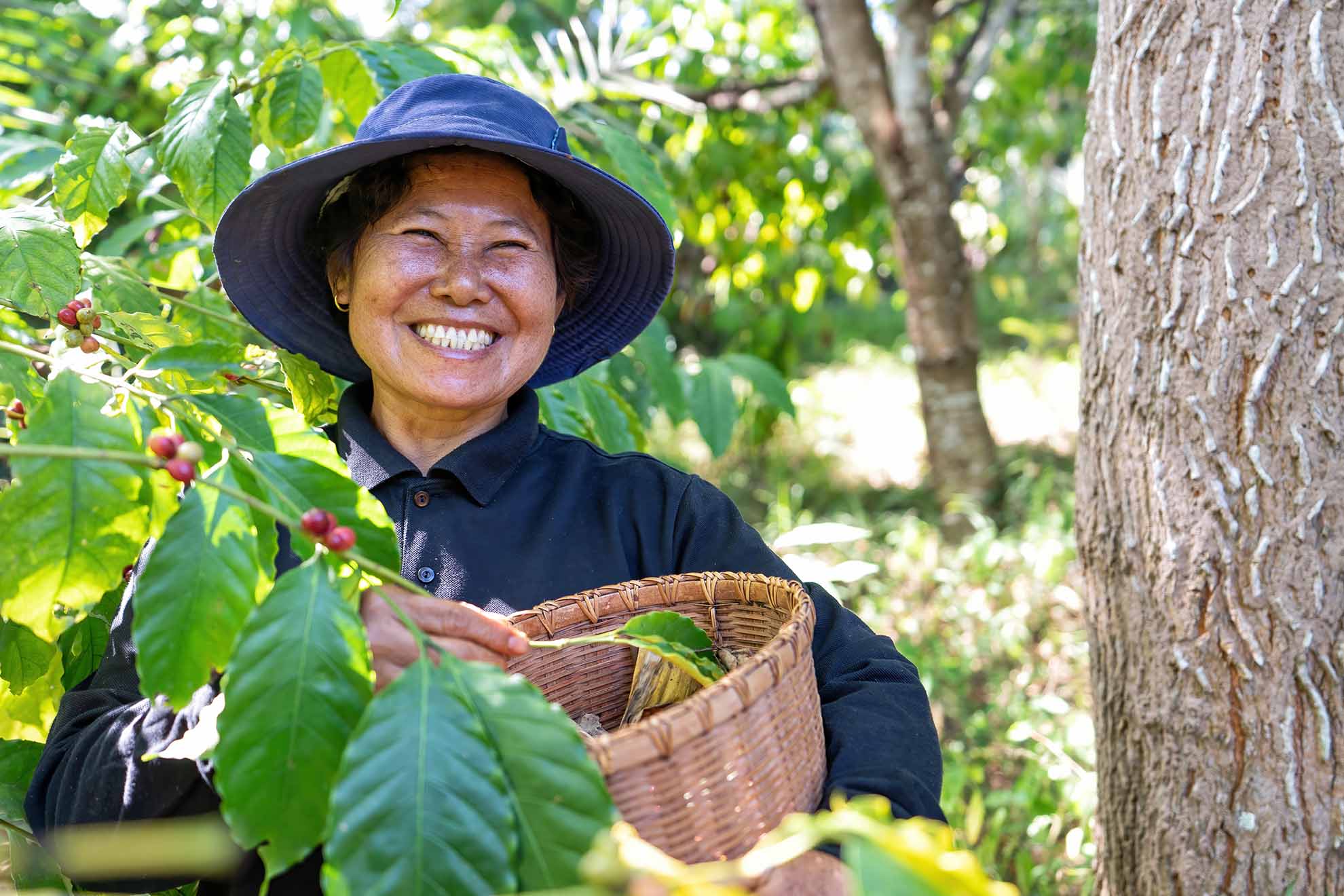
Fairtrade was established in direct response to the plight of smallholder farmers following the devastating collapse of global coffee prices in 1988. It became glaringly clear that coffee growers in developing nations were being severely exploited by volatile market swings, often earning far less than the actual cost of production.
While the Rainforest Alliance puts environmental conservation at the forefront, Fairtrade prioritises worker rights, economic fairness, and social stability. To earn Fairtrade certification, products must be grown by small-scale farmer co-operatives that meet strict economic, social, and environmental benchmarks.
The cornerstone of Fairtrade is its Minimum Price mechanism, which acts as a crucial financial safety net. When global market prices drop below a sustainable level, Fairtrade certified buyers must still pay farmers the guaranteed minimum price. On top of this base price, buyers pay an additional Fairtrade Premium. This extra sum is invested directly into community-led projects chosen by the farmers themselves, such as building schools, establishing clean water wells, or constructing local medical clinics.
Rainforest Alliance vs Fairtrade: key differences explained
While both certifications share the broader goal of making agriculture fairer and greener, comparing their core mechanisms highlights how their priorities differ.
| Feature | Rainforest Alliance | Fairtrade |
|---|---|---|
| Primary Focus | Environmental stewardship, forestry protection, and climate adaptation. | Economic justice, worker rights, and guaranteed floor pricing. |
| Pricing Structure | Market-driven, productivity training, and mandatory Sustainability Differential. | Mandatory Minimum Price safety net and fixed Fairtrade Premium. |
| Farm Structure | Smallholder farms and large commercial plantations. | Small-scale family farmers in democratic co-operatives. |
Primary focus: Rainforest Alliance concentrates heavily on environmental stewardship, forestry protection, and climate adaptation. Fairtrade centres its model around economic justice, worker rights, and guaranteed floor pricing for smallholder co-operatives.
Pricing and financial structure: Fairtrade sets a mandatory Minimum Price and a fixed Premium for community investment. The Rainforest Alliance does not set a fixed minimum price for crops; instead, it relies on market-driven incentives, training in farm productivity, and a mandatory Sustainability Differential paid to certified producers.
Farm structure and eligibility: Fairtrade primarily supports small-scale family farmers organised into democratic co-operatives. The Rainforest Alliance certifies both smallholder farms and large commercial plantations, allowing larger estates to achieve certification provided they meet strict labour and environmental standards.
Understanding UTZ certification and the merger
If you inspect older coffee packaging or pantry supplies, you might occasionally notice a red UTZ Certified logo. UTZ was launched in 2002 by a Guatemalan coffee farmer and a Dutch roaster who wanted to bring sustainable coffee certification to a global scale.
In 2018, UTZ officially merged with the Rainforest Alliance to create a unified global standard. The UTZ label has since been phased out in favour of the single Rainforest Alliance green frog seal. This consolidation makes it much simpler for workplace buyers to identify certified products without navigating multiple overlapping logos.
Why sustainable coffee matters for your office
Upgrading your workplace coffee offering is about more than just taste. Introducing ethically sourced coffee into your office brings tangible benefits to your business and team.
Choosing ethical coffee beans for your office coffee machines delivers measurable advantages across several key areas:
- Supports corporate sustainability targets by providing verifiable proof of ethical sourcing for ESG reporting.
- Boosts employee engagement and workplace satisfaction by showing your team that the company values social responsibility.
- Enhances company reputation among visiting clients, contractors, and prospective hires.
- Ensures high-quality, sustainably cultivated coffee in every cup served across your workplace.
Whether you rely on high-capacity bean-to-cup machines in busy breakout areas or specialty setups, stocking certified whole bean coffee ensures every drink served aligns with your ethical standards. Pair your coffee with sustainable workplace snacks and café favourites or dairy free milk alternatives to create a fully inclusive hot drinks station.