


How can offices cater for dairy-free and lactose-free coffee drinkers?
Lily Hedley | September 30, 2026

The modern office fridge has gotten crowded. Everybody seems to need a different sort of milk. And it’s important to consider these options when spec’ing an office coffee machine.
If you’re responsible for the coffee setup in your workplace, it’s worth understanding what’s actually driving the shift towards alternative milk, and what a dairy-free coffee machine setup needs to look like to genuinely work for everyone using it.
Dairy-free and lactose-free aren’t the same
The two terms get used interchangeably in the office kitchen, but they describe different things, and the distinction matters more than it might seem.
A milk allergy is an immune response where the body treats milk proteins as a threat. Lactose intolerance is different. It’s a digestive issue caused by not having enough of the enzyme needed to break down lactose, the sugar found in milk, and it tends to cause discomfort rather than a medical emergency.
The two conditions have separate causes and separate risk profiles, even though both can lead to people avoiding dairy altogether.
There’s also a growing group who choose dairy-free coffee for non-medical reasons, whether that’s diet, ethical reasons, or simply preference. In fact, plant-based drinks have moved well beyond a niche request: nearly 35 percent of UK households now buy plant-based milk, and oat milk sales alone have nearly doubled in five years. Whatever the reason behind the request, the practical need in an office kitchen is the same: a reliable option that doesn’t involve dairy.
It matters for facilities managers because they need to manage risk. Someone with a diagnosed allergy needs their drink kept genuinely separate from anything containing milk, not just swapped for an alternative milk in a jug that was previously used for dairy. Someone with an intolerance, or someone who’s simply chosen to avoid dairy, still wants the option to be there for them and for it to be safe.
What “catering for it properly” actually looks like
Once you’ve accepted that this isn’t a one-size-fits-all request, the practical options split into a few categories.
Dedicated dairy-free milk in the fridge. The simplest starting point is stocking oat, soya, or almond milk alongside the usual dairy, ideally in clearly labelled, separate containers. This works for casual preference but isn’t enough on its own for anyone managing a genuine allergy, since a shared jug or a shared fridge shelf still carries a contamination risk.
A dairy-free coffee machine setup
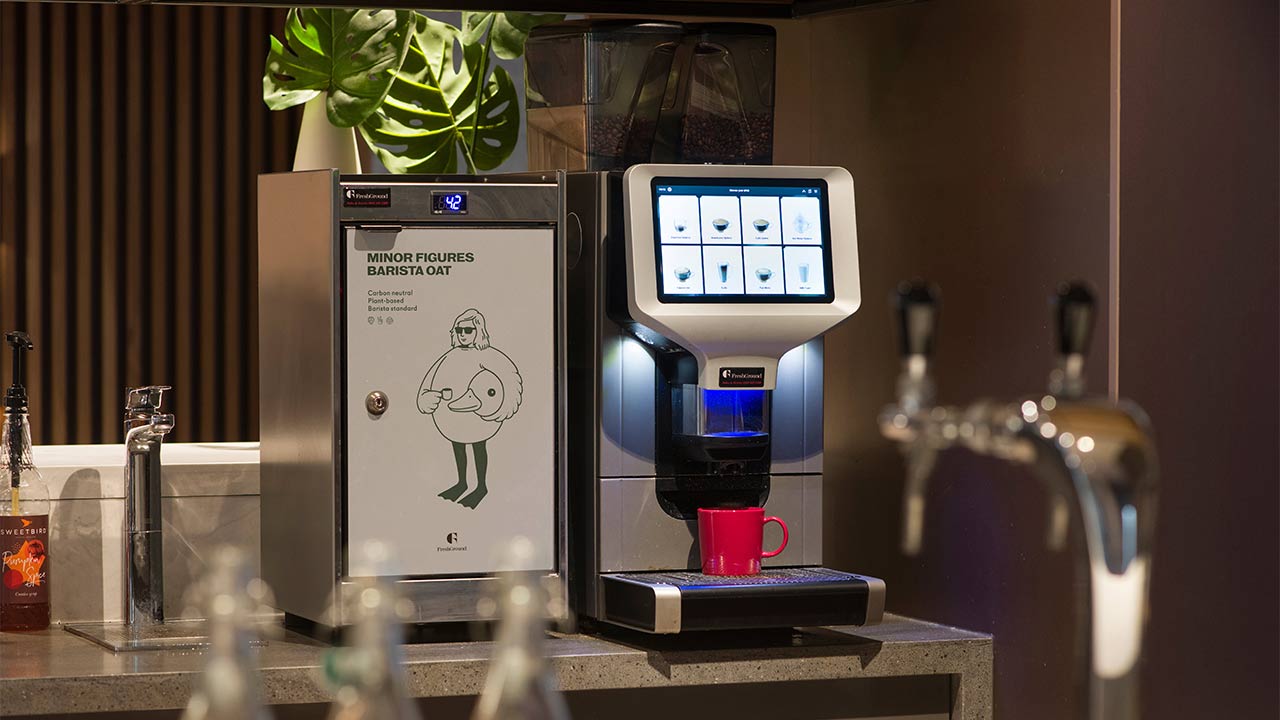
Bean-to-cup and pod machines increasingly offer a built-in dairy-free option, either through a separate milk line for a plant-based alternative or a machine designed to run entirely without dairy attachments. Our answer to this is the F5 Egro Next: a machine that features a certified pathway from the oat milk fridge, which flushes the lines with oat milk between drinks to clean away dairy residue.
Dairy free coffee machine pods
For offices that don’t want the commitment of a bean-to-cup machine, pod systems are worth a look. Pods are sealed and single-use, which removes a lot of the cross-contact risk that comes with shared jugs and shared steam wands, and a dairy-free pod range means staff can pick a plant-based option without touching anything that’s been near dairy at all.
A dedicated lactose-free coffee machine line
Lactose-free cow’s milk still contains milk protein, so it’s a different requirement again from a plant-based alternative, useful for staff who are intolerant but not allergic and would rather keep dairy in their drink. Some workplaces run a small lactose-free milk carton alongside the plant-based options rather than trying to cover every case through one machine.
There isn’t a single right answer here, and the choice usually comes down to how many people actually need the option day to day:
- A dairy-free pod machine option suits smaller offices or a lower volume of alt-milk drinks, where simplicity and low cross-contact risk matter more than variety.
- A bean-to-cup machine with a proper alt-milk line suits busier offices where dairy-free drinks are a regular, high-volume part of the coffee round.
- Stocking both a plant-based milk and a lactose-free dairy milk covers the fact that dairy-free and lactose-free are genuinely different requests, rather than assuming one option satisfies both.
Cross-contamination is the part that gets overlooked

This is where good intentions fall down. A machine that offers an oat milk dispenser doesn’t help much if the milk jug, or the dispensing tubes were last used on dairy and never properly cleaned in between.
The Food Standards Agency’s review of allergen cleaning notes that around 2.6 million people in the UK live with a diagnosed food allergy, and that cleaning equipment properly between allergens is one of the main ways businesses actually reduce that risk, rather than just labelling around it. A few habits make the biggest practical difference in an office kitchen:
- Use separate jugs, wands, or pod slots for dairy and dairy-free drinks, rather than rinsing and reusing the same one.
- Clean the milk line or steam wand thoroughly between switching from dairy to a plant-based alternative, not just a quick rinse under the tap.
- Store dairy-free milk in its own labelled space in the fridge, away from open dairy cartons.
- Brief your team, even informally, that a “just wash it out” approach isn’t good enough for a colleague with a genuine allergy.
None of this needs to be complicated or expensive. It just needs to be consistent, and it’s far easier to build in from the start than to retrofit once someone’s already had a bad reaction.
Getting it right for your team
To recap, catering properly for dairy-free and lactose-free colleagues means:
- Understanding that a milk allergy, lactose intolerance, and a personal choice to avoid dairy are three different things with three different levels of risk.
- Choosing between dedicated milk in the fridge, a proper dairy-free coffee machine setup, or dairy free coffee machine pods, based on how many people actually need the option.
- Treating cross-contamination as a genuine safety issue, not a box-ticking exercise, particularly for anyone with a diagnosed allergy.
Getting the setup right sends a small but clear signal to your team and to visitors: that their dietary needs were actually thought about, not squeezed in as an afterthought.
Let’s chat
If you’re weighing up which setup makes sense for your office, from a straightforward pod-based option to a full bean-to-cup machine with a dedicated dairy-free line, we’re happy to talk it through. Book a visit to our showroom to see the options in person, or get in touch and we’ll help you find the right fit for your team.